
A startup may not own large factories or have decades of profits, yet it can still be worth hundreds of crores.
Why?
Because valuation is not about what you own today, it’s about what you can generate tomorrow.
Startup valuation translates vision, traction, risk, and growth potential into a monetary value that investors, founders, and stakeholders can agree upon.
But how is this value determined?
Who performs it?
And why do two startups with similar revenues often get wildly different valuations?
Let’s break it down.
Decoding the Value of a Startup
Startup valuation is the process of estimating the economic value of a startup at a specific point in time.
It considers not only current numbers, but also:
- Future growth potential
- Scalability of the business model
- Market size and competitive advantage
- Risk and uncertainty
In simple terms:
Startup valuation answers one core question:
“If someone were to invest in or buy this startup today, what would it be worth and why?”
For instance, Zomato was valued at nearly $12 billion (₹8.9 lakh crore) during its 2021 IPO despite being loss-making, as investors priced in its market leadership in food delivery, rapid user growth, and long-term scalability. This highlights how startup valuation reflects future earning potential and strategic positioning, not just present-day financials.
The Role of Valuation in Building a Scalable Startup
Many founders believe valuation matters only during funding rounds.
In reality, valuation impacts every strategic decision.
A clear valuation helps founders:
- Avoid excessive equity dilution
- Negotiate confidently with investors
- Aligning growth plans with value creation
- Prepare for ESOPs, mergers, or exits
Where Traditional Finance Stops, Startup Valuation Begins
Conventional valuation works well when:
- Revenue is stable
- Profits are predictable
- Assets are tangible
Startups break all three rules.
A manufacturing company is valued on plants, machinery, EBITDA, and cash flows.
A startup is valued on:
- Speed of growth
- Size of opportunity
- Ability to monopolise a niche
- Strength of founding team
This is why Nykaa (founded 2012) was valued at billions before it turned consistently profitable. Investors weren’t buying current profits, they were buying India’s beauty consumption story.
Unequal Numbers in Similar Markets
Two startups may operate in the same industry, serve the same customers, and even launch around the same time yet their valuations can move in completely different directions.
Why? Because valuation rewards execution discipline, not just market presence.
Example:
Startup A and Startup B both launch in 2019 as online grocery delivery platforms in India.
- Startup A invests early in supply-chain control, city-wise unit economics, and repeat-customer programs. It expands slowly, ensuring every new city reaches profitability benchmarks.
- Startup B chases rapid expansion, discounts heavily, and launches multiple side offerings without fixing core logistics inefficiencies.
Outcome
- Startup A shows predictable margins and scalable operations, attracting late-stage investors and strategic buyers.
- Startup B struggles with cash burn and inconsistent performance, leading to down rounds.
Resulting Valuations
- Startup A → ₹8,000+ Cr valuation
- Startup B → ₹700 Cr valuation
The Real Lesson
Valuation doesn’t reward being early or being loud.
It rewards clarity of strategy, repeatability, and disciplined execution.
Valuation as a Catalyst for Scalable Growth
A strong valuation does three powerful things:
- Reduces dilution – founders retain control
- Attracts premium investors – better guidance, networks, credibility
- Funds speed – marketing, tech, talent, acquisitions
Razorpay (founded 2014) is a textbook case:
- Early valuation allowed it to raise capital aggressively
- Capital funded developer-friendly APIs, compliance stack, and product depth
- High valuation later helped it expand into lending, payroll, and banking tools
Today, Razorpay is valued at ~$7.5B, not because of payment margins but because of platform dominance.
Meesho: From a Social Selling Idea to a $4+ Billion Company
Founded: 2015
Founders: Vidit Aatrey & Sanjeev Barnwal
Current Valuation: ~$4–4.5 billion (2024–25)
Meesho started with a simple but powerful insight millions of small sellers in India wanted to sell online but were excluded from traditional e-commerce due to high costs, logistics complexity, and lack of digital knowledge. Meesho built a zero-inventory, social-commerce model focused on Tier 2 and Tier 3 India.
How Early Valuation Shaped Meesho’s Journey
- Valuation Based on Market Opportunity
In the early stages, Meesho was valued not on revenue but on the size of India’s informal retail market and the untapped potential of social commerce. This helped investors look beyond short-term numbers and focus on long-term scale.
- Capital Raised Without Losing Control
A strong early valuation allowed Meesho to raise funding without excessive equity dilution. Founders retained strategic control while securing the capital needed to build logistics, technology, and seller infrastructure.
- Valuation as a Strategic Checkpoint
Each funding round involved reassessing the business model, forcing improvements in seller retention, supply chain efficiency, and customer acquisition costs. Valuation acted as a discipline mechanism not just a fundraising milestone.
- Credibility Through Investor Validation
When Facebook (Meta) invested, Meesho’s valuation jumped significantly. This validation strengthened trust among suppliers, logistics partners, and sellers, accelerating platform adoption.
- Runway to Focus on Scale Before Profits
Higher valuations gave Meesho the flexibility to prioritize user and seller growth over immediate monetization. This long runway helped the company dominate value-driven e-commerce without rushing profitability.
Meesho Today: Valuation Reflecting Real Impact
Meesho’s current valuation reflects its massive reach in non-metro India, millions of active sellers, and a capital-efficient platform model. The company’s journey shows that valuation, when aligned with vision and execution, enables scale, patience, and long-term market leadership.
Methods Used to Determine Startup Valuation
Discounted Cash Flow (DCF) Method
The Discounted Cash Flow (DCF) method estimates a startup’s value by forecasting the future cash it can generate and then converting those future amounts into today’s value. This adjustment is necessary because money has a time value ₹1 received in the future is less valuable than ₹1 today due to inflation, opportunity cost, and risk.
Rather than focusing only on current revenue or profits, DCF evaluates the startup’s long-term earning power. It projects free cash flows over several years, assuming how the business will scale, control costs, and eventually generate surplus cash. These projected cash flows are then discounted using a rate that reflects the startup’s risk profile.
Since startups face uncertainty around execution, competition, and funding availability, investors apply a higher discount rate, which lowers present value and builds in a margin of safety. DCF is most effective for startups that have stable revenues, a proven business model, and clear visibility on growth and margins, rather than very early-stage ventures.
DCF Valuation Snapshot
| Component | Value (₹ Cr) |
|---|---|
| PV of 7-Year Free Cash Flows | 43 |
| Discounted Terminal Value | 61 |
| DCF Enterprise Value | 104 |
| Strategic / Growth Premium | 116 |
| Final Valuation Range | 220–230 |
Why DCF Matters?
- Anchors valuation to real cash generation by focusing on free cash flows rather than revenue growth or market multiples alone.
- Cuts through market hype by testing whether growth stories are supported by realistic, risk-adjusted cash flow assumptions.
- Creates a valuation floor that helps investors assess downside risk and intrinsic worth, even during volatile market cycles.
- Explains strategic premiums when high-quality startups trade above DCF due to brand strength, network effects, or long-term market dominance.
Venture Capital Method
The Venture Capital (VC) Method estimates a startup’s value by starting with its expected exit value such as an IPO or acquisition and then working backward to determine what the company is worth today. Instead of relying on current financials, investors focus on the outcome that matters most: how much the business could be sold for in the future.
Investors first estimate the company’s future financial metric at exit (revenue, EBITDA, or users) and apply a market-based exit multiple to arrive at a projected exit valuation. From this, they discount the value using their target return, which is typically high (20–40%+ IRR) to compensate for startup risk, dilution, and failure probability.
This backward calculation determines the maximum price an investor can pay today while still achieving their required return. The VC Method is especially suited for early- and growth-stage startups where cash flows are unpredictable but the path to scale, market size, and exit comparables are reasonably visible.
VC Method Valuation Snapshot
| Step | Input | Value |
|---|---|---|
| Expected Exit Year | Year 5 | — |
| Projected Exit Revenue | ₹1,000 Cr | — |
| Exit Multiple | 5× | ₹5,000 Cr |
| Target IRR | 35% | — |
| Post-Money Value (Today) | — | ₹1,140 Cr |
| Investor Ownership Required | 20% | — |
| Pre-Money Valuation | — | ₹912 Cr |
Why Do VCs Use This Method?
- Aligns valuation with exit reality
The VC method ties today’s valuation directly to what truly matters, the exit. By anchoring value to potential IPO or acquisition outcomes, it ensures pricing reflects real market comparables rather than speculative near-term metrics.
- Ensures target returns are mathematically protected
VCs have defined return expectations to offset high failure rates. Working backward from exit value guarantees that the entry price, ownership stake, and dilution still allow the fund to achieve its target IRR or multiple.
- Easy to communicate to founders and LPs
The logic is intuitive: future value → required return → today’s valuation. This clarity makes it easier to explain deal rationale, ownership asks, and return potential to founders and limited partners.
- Highlights dilution expectations early
By modelling future funding rounds upfront, the VC method shows how ownership will evolve over time, helping both investors and founders set realistic expectations around dilution and control.
Berkus Method
The Berkus Method, developed by venture capitalist Dave Berkus, is used to value pre-revenue and idea-stage startups where traditional financial forecasts are highly speculative. Since there are no reliable revenues or cash flows, the method shifts focus from numbers to execution progress and risk reduction.
Instead of projecting future earnings, the Berkus Method assigns value to key milestones that demonstrate the startup’s ability to execute. These typically include a strong founding team, a validated problem or technology, product development progress, early market validation, and evidence of a scalable business model. Each milestone achieved removes a layer of uncertainty technical, market, or execution risk thereby increasing the startup’s value.
A core feature of this method is its valuation cap, which prevents inflated pricing at very early stages. This keeps valuations grounded, aligns founder and investor expectations, and ensures sufficient upside for investors while rewarding genuine progress rather than speculative promises.
Berkus Method Valuation Framework
| Value Driver | What It Proves | Max Value (₹ Cr approx.) |
|---|---|---|
| Sound Idea | Clear problem–solution fit | 4 |
| Prototype / MVP | Product feasibility | 4 |
| Strong Team | Ability to execute | 4 |
| Strategic Relationships | Market access | 4 |
| Early Traction | Customer validation | 4 |
| Maximum Pre-Revenue Valuation | ₹20 Cr (~$2–2.5M) |
Why It Works for Early Startups?
- Removes dependence on unrealistic forecasts
Early startups rarely have the data needed for credible financial projections. The Berkus Method avoids guesswork by valuing what actually exists today, rather than speculative revenue numbers.
- Focuses on risk reduction, not hype
Value is linked to tangible proof such as a capable founding team, working prototype, or early customer validation rather than pitch decks or market buzz.
- Ideal for idea, MVP, and angel stages
At these stages, success depends more on execution capability than financial performance, making milestone-based valuation more relevant and fair.
- Keeps valuations simple and disciplined
By capping valuation and using clear criteria, the method prevents overpricing, aligns expectations, and preserves upside for both founders and early investors.
Scorecard Method
The Scorecard Method is used to value early-stage startups by benchmarking them against comparable startups that have already raised funding at a similar stage and in the same geography. Instead of inventing a valuation from zero, investors start with the average market valuation for that stage and then adjust it based on the startup’s relative strengths and weaknesses.
Key factors typically assessed include the founding team’s quality, size of the opportunity, product or technology maturity, competitive landscape, traction, and go-to-market readiness. Each factor is weighted based on its importance, and the startup is scored against peer benchmarks. A stronger-than-average profile results in an upward adjustment, while gaps lead to a discount.
This method works well when market data is available and helps ensure pricing stays aligned with real funding trends, making valuations more objective, comparable, and defensible for both founders and investors.
Scorecard Method Valuation Snapshot
| Factor | Weight | Assessment |
|---|---|---|
| Founding Team | 30% | Strong execution background |
| Market Opportunity | 25% | Large, fast-growing market |
| Product / Technology | 15% | Differentiated solution |
| Competitive Position | 10% | Defensible advantages |
| Traction / Validation | 10% | Early customer proof |
| Other Factors | 10% | Legal, timing, risk |
| Adjusted Valuation Outcome | 100% | Above-average |
Example:
If the average pre-money valuation for similar startups is ₹15 Cr, and this startup scores 20% above average, the implied valuation becomes ~₹18 Cr.
Why Do Founders and Investors Use It?
- Anchored to real market data
The Scorecard Method bases valuation on actual funding rounds of comparable startups, keeping pricing aligned with what investors are currently paying in the market rather than theoretical models.
- Flexible for pre-revenue and early-revenue startups
Because it doesn’t rely on detailed financials, it works well even when revenues are limited or inconsistent, making it suitable for angel and seed-stage companies.
- Rewards stronger teams and traction
Startups with experienced founders, early customer validation, or superior product readiness receive higher valuations, creating a fair link between execution quality and price.
- Easy to explain during negotiations
The comparison based logic is intuitive, helping founders and investors justify valuation adjustments transparently and reach alignment faster.
Cost-to-Duplicate Method
The Cost-to-Duplicate Method values a startup by estimating how much it would cost to recreate the business from scratch at the current point in time.
Rather than focusing on future potential or market multiples, this method evaluates the actual historical and replacement costs incurred to build the startup’s assets and capabilities.
Investors assess all tangible and identifiable investments made in developing the company including technology build, product development, infrastructure setup, hiring and training of key personnel, intellectual property creation, and regulatory approvals.
The underlying principle is straightforward:
“If someone were to build the same startup today, how much would it cost?”
The total replication cost becomes the baseline valuation. Adjustments may be made for asset obsolescence, technological upgrades, or inefficiencies in past spending.
This method is particularly relevant for early-stage or asset-heavy startups where future cash flows are highly uncertain but development investments are clearly measurable.
Cost-to-Duplicate Valuation Snapshot
| Component | Estimated Cost |
|---|---|
| Product & Technology Development | ₹12 Cr |
| Team Hiring & Training | ₹6 Cr |
| Infrastructure & Setup | ₹5 Cr |
| IP Creation & Legal Costs | ₹4 Cr |
| Total Replacement Cost | ₹27 Cr |
| Strategic Adjustment (Efficiency / Optimization)** | (+₹3 Cr) |
| Estimated Valuation | ₹30 Cr |
Why Is This Method Used?
- Objective and cost-based approach
The valuation is grounded in actual investments made, reducing dependence on aggressive growth assumptions.
- Useful for early-stage startups
Pre-revenue or R&D-intensive startups can be valued even when reliable projections are unavailable.
- Establishes valuation floor
It provides a baseline or minimum value below which rational investors are unlikely to transact.
- Helpful in downside scenarios
In distress, restructuring, or liquidation contexts, replacement cost can guide conservative valuation decisions.
Risk Factor Summation Method
The Risk Factor Summation Method values a startup by explicitly evaluating the downside risks that could affect its ability to succeed. Rather than assuming a best-case growth story, it compares the startup’s overall risk profile to that of an average startup at the same stage and geography.
The process begins with a base valuation derived from typical market deals. Investors then assess multiple risk categories such as management capability, technology readiness, market adoption, competitive pressure, regulatory environment, capital requirements, and exit conditions. Each risk is rated as higher, lower, or similar to the average startup, and the valuation is adjusted upward or downward accordingly.
By quantifying risk in a structured way, this method produces a more conservative and disciplined valuation, making it especially useful for angel and seed-stage investing where uncertainty is high and risk differentiation matters.
Risk-Based Valuation Snapshot
| Risk Category | Risk Assessment | Value Impact (₹ Cr) |
|---|---|---|
| Management Risk | Strong team | +2 |
| Market Risk | Growing demand | +1 |
| Product / Tech Risk | MVP validated | +1 |
| Competitive Risk | Moderate pressure | 0 |
| Financial Risk | High burn | –2 |
| Legal / Regulatory Risk | Manageable | 0 |
| Net Risk Adjustment | — | +2 |
| Base Valuation | — | ₹15 |
| Final Valuation | — | ₹17 Cr |
Why Investors Use This Method?
- Forces structured risk thinking
The method breaks risk into defined categories, pushing investors to consciously evaluate management, technology, market, regulatory, and funding risks instead of relying on intuition alone.
- Makes valuation transparent and defensible
Each upward or downward adjustment is tied to a specific risk factor, making the final valuation easier to justify to co-investors, founders, and investment committees.
- Useful for angel and seed-stage startups
At very early stages where data is limited, risk differentiation matters more than financial performance, making this method highly relevant.
- Complements Scorecard and Berkus methods
While Berkus focuses on milestones and Scorecard on relative strength, the Risk Factor method adds a downside lens, creating a more balanced early-stage valuation view.
Core Building Blocks of Startup Valuation
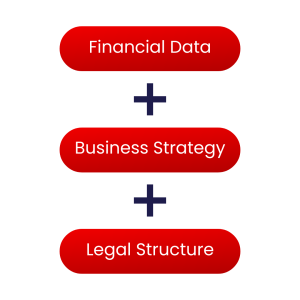
A strong startup valuation is not driven by assumptions or hype it is built on structured, reliable, and well-documented information. Valuation professionals rely on three key pillars to arrive at a fair and defensible value.
1. Information: Understanding the Economic Reality
- Historical Financial Statements
Past financial statements help evaluators understand revenue trends, expense patterns, and financial discipline. Even if the startup is loss-making, historical data reveals how efficiently capital has been deployed and whether costs are aligned with growth.
- Revenue Projections (3–5 Years)
Future projections form the backbone of most valuation models. These projections should be realistic, well-reasoned, and linked to operational drivers such as customer growth, pricing, and retention rather than aggressive assumptions.
- Cost Structure and Burn Rate
A clear breakdown of fixed and variable costs helps assess sustainability and capital efficiency. Burn rate analysis shows how long the startup can operate with existing funds and whether future fundraising will be required.
2. Business & Strategic Inputs: Measuring the Strength of the Model
- Business Model and Pricing Strategy
The way a startup makes money directly impacts its valuation. Evaluators examine revenue streams, pricing power, margins, and scalability to determine whether the model can generate long-term value.
- Market Size and Target Segment
A large and growing market increases valuation potential. Professionals assess total addressable market (TAM), serviceable market, and the startup’s ability to capture meaningful market share over time.
- Competitive Landscape
Understanding competitors helps measure differentiation and defensibility. Valuation improves when a startup demonstrates clear advantages such as technology, brand, network effects, or switching costs.
3. Legal & Structural Details: Ensuring Clarity and Defensibility
- Capitalization Table and Shareholding Structure
The cap table shows ownership distribution among founders, investors, and employees. A clean and well-organized cap table reduces risk and increases investor confidence, directly supporting higher valuations.
- ESOP Plans (If Any)
Employee stock option plans impact future dilution and must be factored into valuation. Well-structured ESOPs signal strong talent retention strategy, while unclear plans can raise concerns during investment or exit.
- Investor Rights and Preferences
Existing investor terms such as liquidation preferences, anti-dilution rights, and voting rights affect equity value. Valuation professionals adjust outcomes to reflect these rights accurately.
The Final Word
Startup valuation is not about arriving at a perfect number, It is about understanding what drives value and how consistently it can be created. When founders treat valuation as a strategic tool rather than a fundraising formality, it brings clarity to decisions on growth, capital, and control.
The startups that scale sustainably are the ones that use valuation as a mirror reflecting strengths, exposing gaps, and guiding execution. In the long run, valuation does not create success; strong businesses do. Valuation simply reveals it.