
For listed companies, preparing the Business Responsibility and Sustainability Report (BRSR) involves collecting data from multiple departments, consolidating performance indicators and ensuring that disclosures are complete, consistent and finalized within the reporting timeline. Companies must ensure that each disclosure is supported by reliable data, documented calculation methodologies and adequate records, with a clear basis for how the reported figures have been derived and validated. These requirements become particularly relevant as companies prepare for BRSR Core assessment or assurance.
With the phased applicability of BRSR Core extending to the top 1,000 listed entities by market capitalization in FY 2026-27, companies need to look beyond the completeness of their ESG disclosures and assess the reliability of the underlying data. BRSR Core is a subset of BRSR framework that focuses on key performance indicators across nine ESG attributes, covering areas such as greenhouse gas emissions, energy consumption, water management, waste management and workforce-related metrics. Applicable entities are required to undertake either assessment or assurance in accordance with SEBI’s requirement.1
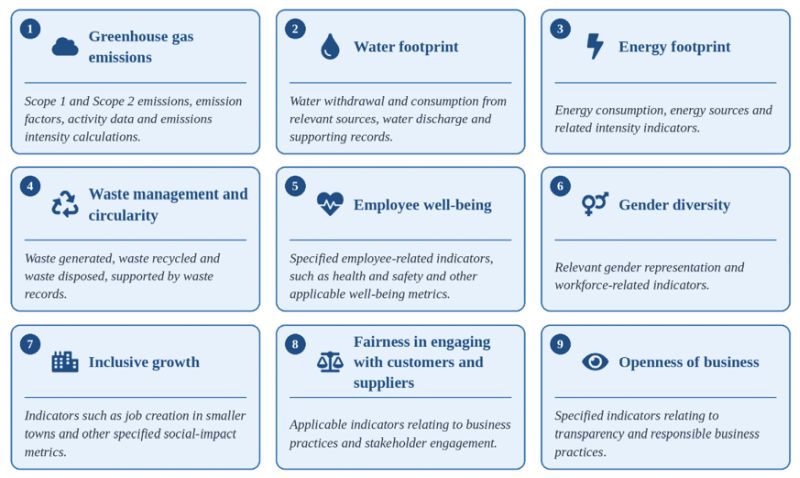
Figure 1: KPIs covered under BRSR Core2
This places greater emphasis on how reported figures are calculated, where the data comes from and whether the information can be substantiated through supporting records. Even when disclosures appear complete, inconsistencies in source data, calculation methods or documentation can create challenges during assessment or assurance.
What Is the Difference Between BRSR Core Assessment and Assurance?
Listed entities may undertake either assessment or assurance of their BRSR Core disclosures, subject to SEBI’s applicable requirements. Both approaches focus on the reliability of reported ESG indicators, but they differ in the standards that govern the engagement.
For assessment, SEBI’s circular dated 28 March 20253 specifies that the third-party assessment of BRSR Core disclosures must be carried out as per the standards developed by the Industry Standards Forum (ISF) in consultation with SEBI. These standards guide companies and assessment providers on how BRSR Core indicators should be reported and assessed.
Assurance, on the other hand, is an independent engagement conducted under an applicable assurance standard. SEBI’s FAQs4, state that the assurance provider may use an appropriate, globally accepted standard for sustainability or non-financial reporting, or a standard issued by the Institute of Chartered Accountants of India (ICAI). These include:
- ISAE 3000 – An international standard for assurance engagements on information other than historical financial statements, including sustainability information.
- ISSA 5000 – An international standard designed specifically for assurance engagements on sustainability information.
- SSAE 3000 – ICAI’s Standard on Sustainability Assurance Engagements.
- SAE 3410 – ICAI’s Standard on Assurance Engagements on Greenhouse Gas Statements.
Whichever standard is used, it should be disclosed.
For companies, understanding this distinction is an important part of preparation. Those opting for assessment should familiarize themselves with the applicable ISF standards, while those opting for assurance should understand the requirements of the selected assurance standard, the scope of the engagement and the evidence needed to support their disclosures. In either case, reliable source data, documented calculation methodologies and traceable supporting records remain essential.
Why Does BRSR Core Readiness Matter?
Consider a listed manufacturing company preparing its annual BRSR. The Sustainability team is responsible for consolidating information on energy consumption, water usage, greenhouse gas emissions and waste management. To prepare these disclosures, it collects data from different functions, including Operations for resource consumption, HR for workforce-related indicators and Finance for relevant records and figures. Once the information is compiled, the report appears complete and ready for finalization.
However, when the information is reviewed more closely, inconsistencies begin to emerge. Energy figures do not reconcile with utility bills, emissions calculations rely on undocumented assumptions, and employee-related figures have been compiled using different definitions across locations. These gaps may not be apparent during routine reporting, but they can become significant when the underlying data, calculation methodologies and supporting evidence are examined during assessment or assurance.
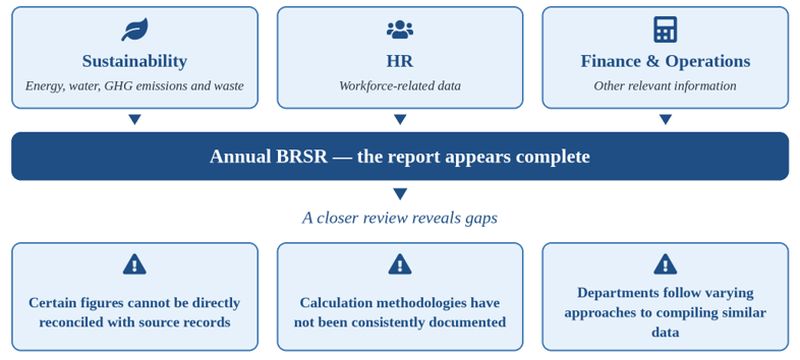
Figure 2: Where Gaps Can Emerge in a Complete-Looking BRSR
The challenge extends beyond reporting ESG performance to maintaining accurate, consistent and verifiable information supported by appropriate documentation and traceable to its original source, allowing it to withstand independent assessment or assurance.
How Should Companies Prepare for BRSR Core Assessment or Assurance?
A structured preparation process can help companies establish clear responsibilities, strengthen the reliability of reported information and address gaps before the formal engagement begins. The following seven steps provide a practical roadmap.
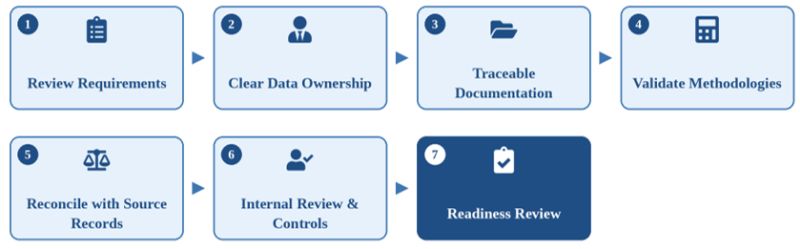
Figure 3: The Seven-Step Preparation Roadmap
1. Understand the Applicable Requirements
Begin by identifying the BRSR Core indicators applicable to the company for the relevant reporting period, along with the reporting scope and organizational boundary. Understand the requirements associated with the chosen assessment or assurance approach and determine the information and evidence needed for each indicator. This helps establish clear reporting expectations and identify potential gaps at an early stage.
2. Establish Clear Data Ownership
Reporting data is collected from multiple departments, including HR, Finance, Operations and Procurement. Assign clear responsibility for preparing, validating and approving each relevant indicator. Defined ownership strengthens accountability, reduces inconsistencies arising from fragmented data collection and minimizes last-minute follow-ups.
3. Maintain Traceable Supporting Documentation
Each reported indicator should be supported by appropriate source records. Depending on the metric, these may include electricity bills, fuel records, water consumption logs, waste disposal documentation, payroll records or employee registers. The reporting team should be able to explain the source of each figure, the process through which it was compiled and how it was incorporated into the final disclosure.
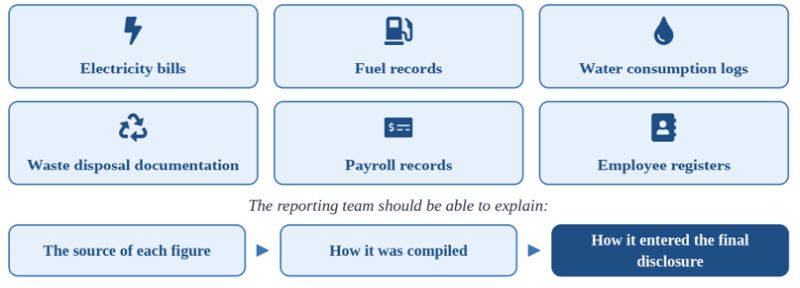
Figure 4: Source Records That Can Support Reported Indicators
4. Validate Calculation Methodologies
Review the methodologies and assumptions used to calculate the reported indicators. These may include emission factors, conversion factors, intensity ratios, allocation methods and estimation techniques, wherever applicable. Ensure that the basis of calculation is documented, applied consistently and aligned with the relevant reporting requirements. Any material assumptions or methodological limitations should be clearly documented and, where required, disclosed.
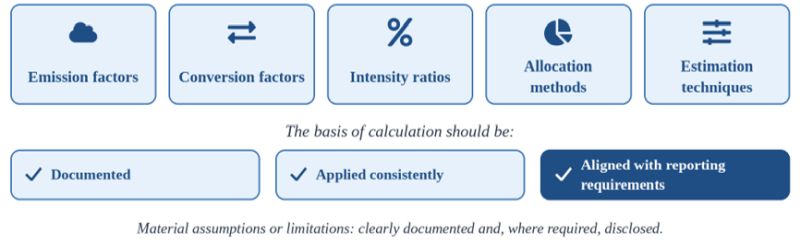
Figure 5: Methodologies and Assumptions to Review
5. Reconcile Reported Data with Source Records
Cross-check the figures proposed for disclosure against underlying records and relevant internal reports. For instance, energy consumption should be reconciled with utility bills and consumption logs, while workforce indicators should be checked against HR records and applicable reporting definitions. Investigate discrepancies, record the reasons for adjustments and ensure that the final figures are consistent across the relevant records and disclosures.
6. Strengthen Internal Review and Controls
Establish a review process before the information is finalized for reporting. This may include supervisory checks, validation of calculations, departmental approvals and documented sign-off on material adjustments. Maintain a clear record of changes made during review, including their rationale and approval. These controls help identify errors and unsupported figures before the formal assessment or assurance engagement begins.
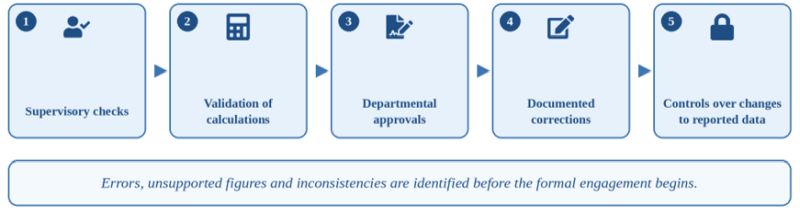
Figure 6: A Structured Internal Review Process
7. Conduct a Readiness Review
Before finalizing the disclosures, assess whether the required data is complete, supporting evidence is available, calculation methodologies are documented and identified gaps have been addressed. A readiness review can help prioritise corrective actions, improve coordination across departments and reduce avoidable delays during formal engagement.
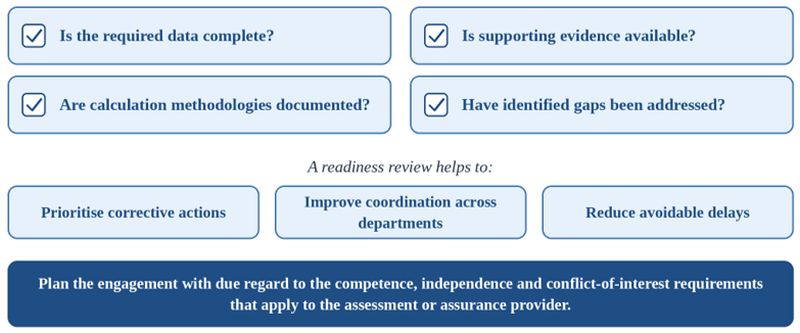
Figure 7: The Readiness Review
How Can Companies Derive Value from BRSR Core Reporting?
BRSR Core assessment or assurance should not be approached as a year-end reporting task. Integrating data validation, documentation and internal review into the regular reporting cycle helps companies identify gaps early, reduce last-minute reconciliations and build a more reliable basis for sustainability disclosures.
Beyond meeting reporting requirements, the process can help companies develop a clearer understanding of their ESG performance and identify opportunities to improve operational efficiency and resource management. By examining trends in resource consumption, emissions and workforce-related indicators, companies can identify areas that require management attention and use these insights to inform business priorities.
Ultimately, BRSR Core can help companies move beyond broader sustainability disclosures to examine key ESG performance indicators more closely, identify operational gaps and recognize opportunities for improvement. By understanding the factors behind their reported performance, companies can prioritise actions, strengthen resource efficiency and incorporate measurable ESG outcomes into business planning.
Seeking BRSR Core Assessment or Assurance for your organization?
To discuss your organization’s BRSR Core requirements and understand how Corporate Professionals can assist, connect with our ESG team at esg@indiacp.com.
Footnotes
1 Securities and Exchange Board of India (SEBI), Measures to Facilitate Ease of Doing Business with Respect to Framework for Assurance or Assessment, ESG Disclosures for Value Chain, and Introduction of Voluntary Disclosure on Green Credits, Circular No. SEBI/HO/CFD/CFD-PoD-1/P/CIR/2025/42, 28 March 2025. Available at: https://www.sebi.gov.in/legal/circulars/mar-2025/measures-to-facilitate-ease-of-doing-business-with-respect-to-framework-for-assurance-or-assessment-esg-disclosures-for-value-chain-and-introduction-of-voluntary-disclosure-on-green-credits_93102.html
2 Securities and Exchange Board of India (SEBI), BRSR Core – Framework for Assurance and ESG Disclosures for Value Chain, July 2023. Available at: https://www.sebi.gov.in/sebi_data/attachdocs/jul-2023/1689166456465.pdf
3 Securities and Exchange Board of India (SEBI), Measures to Facilitate Ease of Doing Business with Respect to Framework for Assurance or Assessment, ESG Disclosures for Value Chain, and Introduction of Voluntary Disclosure on Green Credits, Circular No. SEBI/HO/CFD/CFD-PoD-1/P/CIR/2025/42, 28 March 2025. Available at: https://www.sebi.gov.in/legal/circulars/mar-2025/measures-to-facilitate-ease-of-doing-business-with-respect-to-framework-for-assurance-or-assessment-esg-disclosures-for-value-chain-and-introduction-of-voluntary-disclosure-on-green-credits_93102.html
4 Securities and Exchange Board of India (SEBI), FAQs for LODR Regulations, Section V: Business Responsibility and Sustainability Report (BRSR) Core, Question 8, updated as on 23 April 2025. Available at: https://www.sebi.gov.in/sebi_data/faqfiles/apr-2025/1745399101865.pdf