
For decades, Rule 11UA of the Income-tax Rules, 1962 was the standard reference point whenever a valuer, tax officer, or company needed to determine the Fair Market Value (FMV) of shares, jewellery, or artistic work for tax purposes. With the Income-tax Act, 2025 coming into force from 1 April 2026, and the corresponding Income-tax Rules, 2026 replacing the 1962 Rules, this valuation framework has been consolidated and renumbered as Rule 57. This article looks at what Rule 57 covers, how each category of asset is valued under it, who is authorised to carry out the valuation, and how the framework applies in practice — with diagrams to make each step easy to follow.
1. Why Valuation Rules Matter
Wherever tax law taxes a person on the basis of the value of an asset, rather than simply the price actually paid or received, it needs an objective way of arriving at that value. Left unregulated, private parties transferring unlisted shares, jewellery, or property could agree on almost any price they like, since there is frequently no public market to check the figure against. This creates an obvious opportunity to shift value between related parties — for example, within a family, between group companies, or between a company and its shareholders — without that value ever being taxed.
Valuation rules exist to close this gap. By prescribing, in advance, exactly how the Fair Market Value of a given category of asset must be computed, the law removes the guesswork and negotiation from the tax computation itself. Whatever the parties may have agreed to pay, the tax consequences are tested against the FMV arrived at under the prescribed rule, not against the contract price alone.
Under the old regime, this task was performed by Rule 11UA, together with the closely related Rules 11UAA and 11UAB. Under the new regime, the same function is performed by a single, consolidated provision: Rule 57 of the Income-tax Rules, 2026.
2. From Rule 11UA to Rule 57: The Transition
When the Income Tax Department released the draft Income-tax Rules, 2026 for public consultation, one of the notable structural changes was the consolidation of three previously separate valuation rules — Rule 11UA, Rule 11UAA, and Rule 11UAB — into a single rule, Rule 57. Commenting on this change, Sandeepp Jhunjhunwala, Partner at Nangia Global, observed that this consolidation enhances coherence and mitigates the ambiguity that had arisen from having valuation provisions spread across multiple, cross-referencing rules.
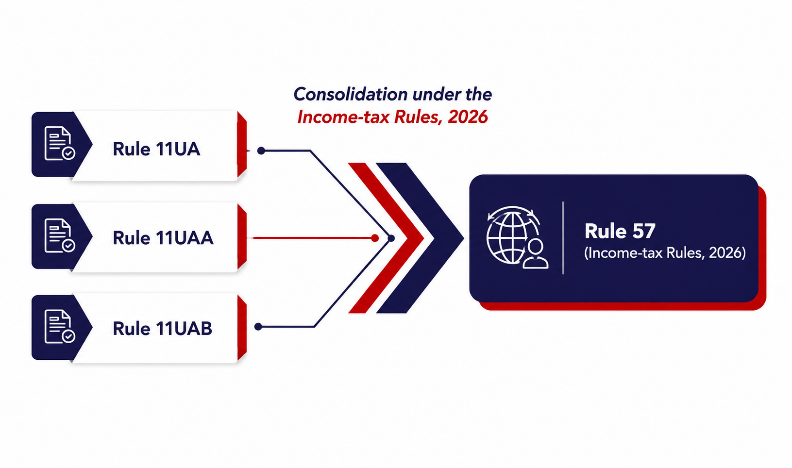
Figure 1: Rules 11UA, 11UAA, and 11UAB have been consolidated into a single Rule 57.
This is a structural simplification rather than a wholesale change in valuation policy. Jhunjhunwala further observed, in remarks carried by ET Wealth Online, that bringing every asset category under one rule, drafted in plain language and kept broadly consistent with the earlier framework, gives practitioners continuity while narrowing the scope for interpretational disputes. In other words, practitioners familiar with the logic of Rule 11UA will find most of that logic intact under Rule 57 — just gathered into one place and expressed in simpler language.
The draft Rule 57 was placed in the public domain for stakeholder feedback before formal notification, alongside the rest of the draft Income-tax Rules, 2026 and related forms. The Income-tax Rules, 2026 were subsequently notified by the CBDT on 20 March 2026 (Notification No. G.S.R. 198(E)) and took effect from 1 April 2026, replacing the 1962 Rules in their entirety.
3. Scope and Assets Covered under Rule 57
Rule 57 is not limited to shares. It is a single point of reference for determining the Fair Market Value of several distinct categories of property, each with its own prescribed valuation approach. In practice, a valuer is called on to apply Rule 57 whenever tax law requires FMV to be worked out — most commonly on the receipt of property without adequate consideration, on computing capital gains where the price paid does not reflect true value, or on testing whether a transaction between related parties is at arm’s length.

Figure 2: The categories of assets whose Fair Market Value is determined under Rule 57.
● Jewellery — valued at open market price, invoice value (if purchased from a registered dealer), or a registered valuer’s report where the value exceeds ₹5,00,000 and it was acquired otherwise than by purchase.
● Archaeological collections, drawings, paintings, sculptures, or any work of art (“artistic work”) — valued on the same basis as jewellery: open market price, invoice value, or a registered valuer’s report above the ₹5,00,000 threshold.
● Immovable property, being land or building or both — valued at the value adopted, assessed, or assessable by a Central or State Government authority for stamp duty purposes on the valuation date.
● Shares and securities, both quoted and unquoted — valued using market price (for quoted shares) or a formula-based/method-based approach (for unquoted shares).
● Any other property not separately listed — valued at the price it would ordinarily fetch if sold in the open market on the valuation date.
This breadth is one reason Rule 57 is described as a single point of reference: rather than consulting different rules depending on the asset in question, a practitioner can look to one consolidated rule for the valuation methodology applicable to virtually any property relevant to a tax computation.
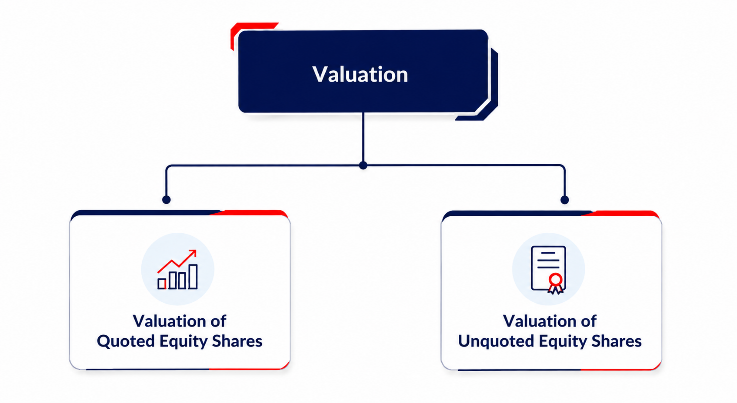
4. Valuation of Quoted Shares
Quoted shares — that is, shares listed and regularly traded on a recognised stock exchange — are the most straightforward category to value, precisely because an observable market price already exists. Rule 57 draws a distinction based on how the transaction takes place.
Transfer through a recognised stock exchange
Where shares are transacted on a recognised stock exchange, the transaction price itself is treated as the Fair Market Value. Since the exchange provides a transparent, publicly verifiable price discovery mechanism, there is no need for any further adjustment.
Transfer other than through a stock exchange
Where quoted shares are transferred privately, off-market, FMV is still anchored to the exchange price rather than the negotiated figure. The lowest price quoted on the relevant recognised stock exchange on the valuation date is taken as FMV; if there is no trading in that share on the valuation date itself, the lowest price quoted on the immediately preceding date on which trading took place is used instead.
5. Valuation of Unquoted Equity Shares — the NAV Method
Unquoted equity shares present the harder valuation problem, since there is no market price to refer to at all. Rule 57 addresses this through a formula-based Net Asset Value (NAV) approach, which derives the value of a share from the company’s own balance sheet, adjusted in specific, prescribed ways.
The prescribed formula

Where the components of the formula are:
- A = book value, or Fair Market Value, of immovable property held by the company, as applicable
- B = Fair Market Value of jewellery and artistic works held by the company
- C = Fair Market Value of shares and securities held by the company
- D = book value of all other assets of the company
- L = book value of liabilities, excluding equity share capital, reserves and surplus, provision for taxation (net of tax actually paid), proposed dividends, and any contingent or unascertained liabilities
- PE = total paid-up equity share capital of the company
- PV = paid-up value of the particular share being valued
The logic of the formula is straightforward once the exclusions are understood: it takes the company’s total adjusted net worth (assets, valued appropriately, less genuine external liabilities) and divides that net worth across the paid-up equity capital, before scaling the result to the paid-up value of the specific share in question. Excluding items like share capital, reserves, and proposed dividends from liabilities prevents double-counting, since those items already represent the shareholders’ own stake in the company rather than amounts owed to outsiders.
Why the NAV Method is the default for unquoted shares
In the absence of a market price, an asset-based measure of value is the most objective, auditable starting point available, because it is anchored to figures that are already independently verified through the company’s own books of account and, where relevant, independent valuation of specific asset classes such as property or jewellery. This is precisely why Rule 57 retains the NAV Method as the principal formula-driven approach for unquoted equity shares, carrying forward the same underlying methodology that applied under the erstwhile Rule 11UA.
6. Core Valuation Principles under Rule 57
Beyond the specific formulas and methods, Rule 57 is also understood to embody a set of overarching principles that apply across all the asset categories it covers, particularly for unquoted shares where professional judgment plays a larger role than for assets with a ready formula or government-assessed value.
- Arm’s Length Standard: valuation must reflect what an independent, unconnected buyer would reasonably be willing to pay in an open market, rather than a figure convenient to related parties.
- Consistency: whichever method is selected for a given valuation, it should be applied consistently and be capable of justification if questioned.
- Substance over Form: the valuation must capture the true economic substance of the business or asset, not merely its form as reflected in a contract or nominal book entry.
- Documentation: the assumptions, inputs, and methodology used must be adequately recorded and supported, so that the valuation can withstand scrutiny in an assessment or appeal.
These principles matter most where Rule 57 allows some flexibility in methodology — for instance, in relation to unquoted shares other than equity shares, or where internationally accepted valuation approaches are permitted alongside the prescribed NAV formula. Flexibility in method selection is not an invitation to arbitrary valuation; it is flexibility bounded by these principles.
7. Who Can Value — Accountants and Registered Valuers
Who Can Undertake the Valuation?
- Merchant Banker: For certain categories of unquoted shares and securities, the Rules specifically recognise a Merchant Banker as a professional who may provide a valuation report. Merchant Bankers may also undertake share valuations where required under the applicable regulatory framework.
- Accountant: An Accountant, meeting the prescribed definition and eligibility conditions under the Income-tax Rules, 2026, may undertake valuations where the Rules specifically provide for such professional certification or reporting.
- Registered Valuer: A Registered Valuer is specifically recognised for valuation of certain assets, such as jewellery and artistic works, where a valuation report is required under the Rules.
- Applicable Regulatory Framework: Depending on the nature of the asset, transaction and purpose of valuation, the valuation may also need to comply with the requirements prescribed under the Companies Act, SEBI regulations, FEMA or other applicable laws and regulations.
8. Step-by-Step Process for Applying Rule 57
Bringing the framework together, applying Rule 57 to a real transaction generally follows a consistent sequence of steps, regardless of the specific asset class involved.
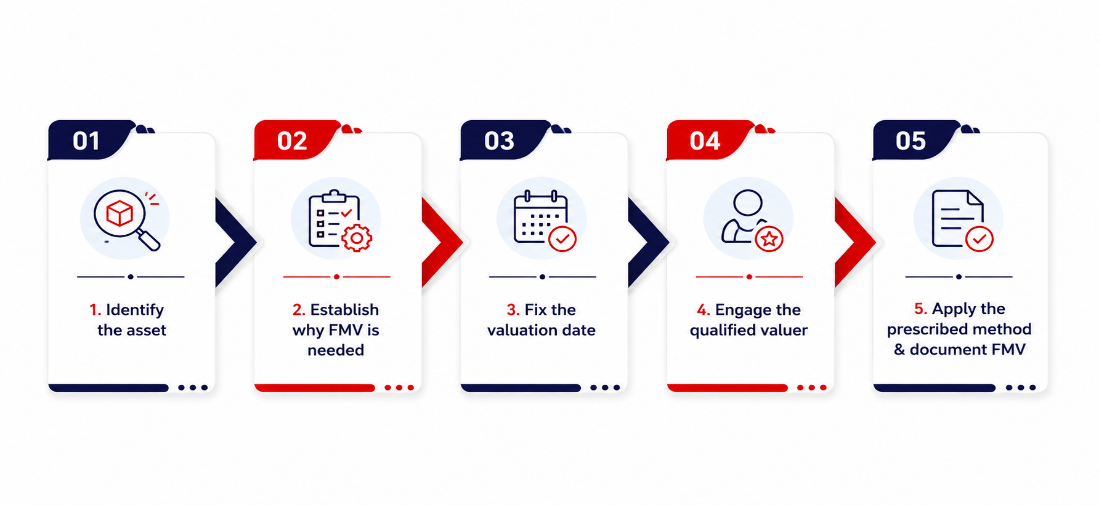
Figure 3: The practical sequence of steps in applying Rule 57 to a transaction.
- Step 1: Identify the nature of the asset involved — shares (quoted or unquoted), jewellery, artistic work, immovable property, or another category.
- Step 2: Establish what is driving the need for FMV — typically a transfer, a gift, a share issuance, or a similar event where the actual consideration may not reflect true value.
- Step 3: Fix the valuation date, which is normally the date of the transaction or transfer in question.
- Step 4: Engage the appropriately qualified valuer for the asset and context — an Accountant, Registered Valuer, or Merchant Banker, as required.
- Step 5: Apply the specific method prescribed under Rule 57 for that asset class, and arrive at a documented, defensible Fair Market Value.
9. Practical Illustration
Consider PQR Private Limited, an unquoted company. Mr. A transfers 5,000 equity shares to Mr. B, an unrelated party, at a price below the shares’ Fair Market Value. FMV must be determined under Rule 57 as on the date of transfer.
Step 1: Adjusted balance sheet figures (₹)
| Particulars | Amount (₹) |
| A: Immovable property (adjusted to FMV) | 60,00,000 |
| B: Jewellery and artistic work (FMV) | 4,00,000 |
| C: Shares and securities held (FMV) | 10,00,000 |
| D: Other assets (book value) | 36,00,000 |
| Total Adjusted Assets (A+B+C+D) | 1,10,00,000 |
| L: Liabilities (trade payables + bank loan) | 30,00,000 |
Step 2: Net Asset Value
NAV = 1,10,00,000 − 30,00,000 = ₹80,00,000
Step 3: FMV per share
Paid-up equity capital (PE) is ₹16,00,000, divided into 1,60,000 shares of ₹10 paid-up value each (PV).
FMV per share = (80,00,000 / 1,60,000) × 10 / 10 = ₹50.00
The shares were actually transferred at ₹35 per share, for a block of 5,000 shares, against an FMV of ₹50 per share.
Difference = ₹15 × 5,000 shares = ₹75,000
Since this difference exceeds ₹50,000, it is brought to tax in the hands of Mr. B, illustrating how Rule 57 supplies the valuation figure that the tax computation then acts upon.
Taken together, Rule 57 represents continuity dressed in a simpler, more consolidated form: the underlying valuation logic that practitioners have applied for years under Rule 11UA remains largely intact, but it is now easier to locate, easier to read, and more consistently expressed across every category of asset it covers.
Sources
https://www.incometaxindia.gov.in/w/rule-11ua
https://npahilwani.com/valuation-unquoted-shares-income-tax-act-2025-rule-57/
https://database.taxsutra.com/articles/9df4ccd83ecdc1306ee3b173c420b2/expert_article
Comments attributed to Sandeepp Jhunjhunwala, Partner, Nangia Global, as reported by ET Wealth Online.
CBDT Notification No. G.S.R. 198(E) dated 20 March 2026, notifying the Income-tax Rules, 2026.
Disclaimer: This article is prepared for general information and knowledge-sharing purposes only and is based on publicly available sources believed to be reliable as of the date of publication. It does not constitute, and should not be relied upon as, professional, tax, legal, or valuation advice, and does not represent the opinion or a formal valuation view of Corporate Professionals Private Limited on any specific transaction. Readers should independently verify the applicable provisions of the Income-tax Act, 2025 and the Income-tax Rules, 2026 (including any subsequent amendments or clarifications) and seek appropriate professional advice before acting on any information contained herein. Views attributed to any individual quoted in this article are their own and do not necessarily reflect the views of Corporate Professionals Private Limited.